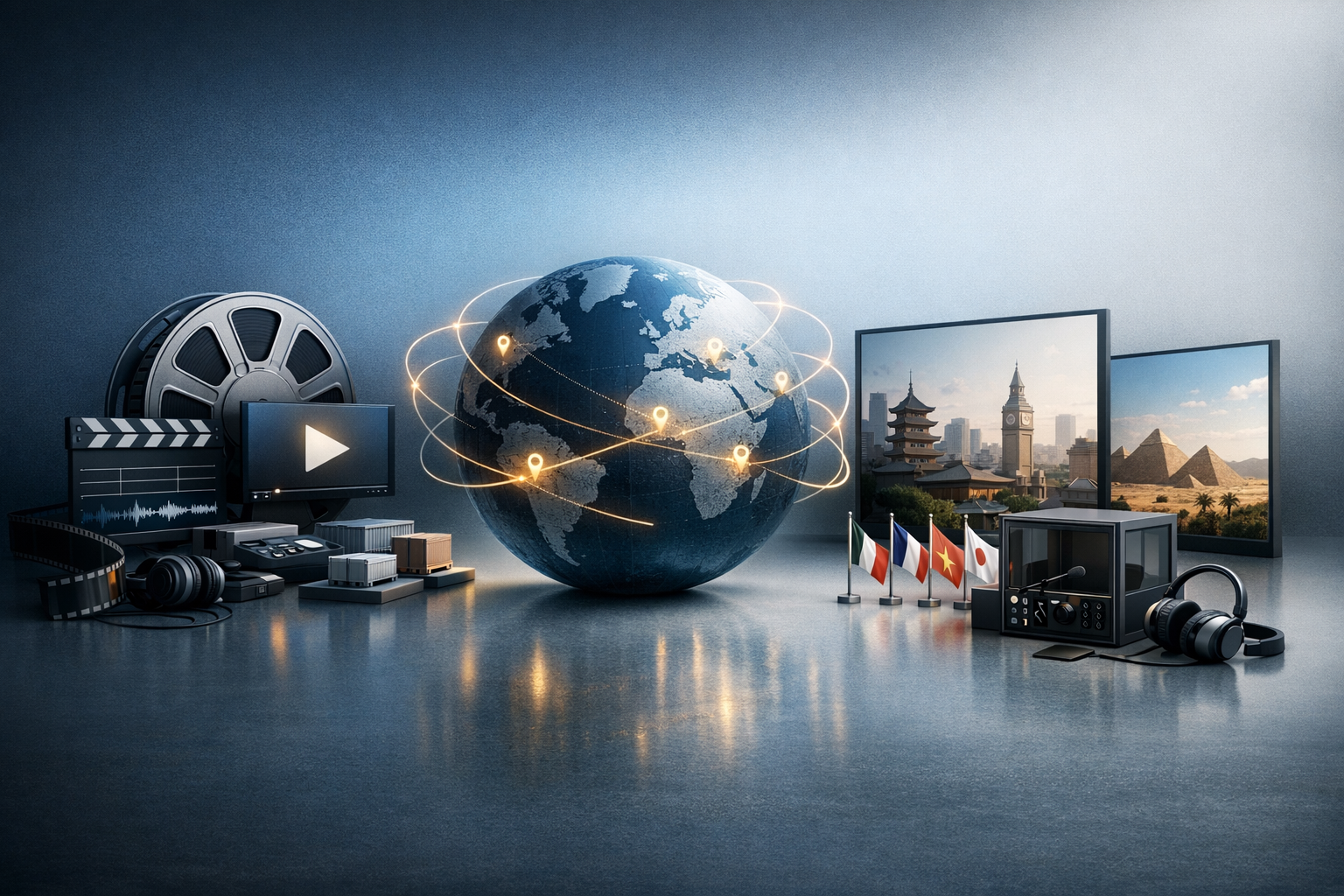
Expanding digital content across borders requires more than simple translation. For videos to truly resonate with international audiences, every element – from dialogue and on-screen text to cultural references and humor – must be carefully adapted. This is where professional video localization services come in, turning a single source video into multiple market-ready versions that feel native to viewers around the world.
1. Analyzing Your Video and Target Markets
The process starts with a thorough analysis of your source video and the markets you want to reach. Localization specialists review content type, audience demographics, tone, and platform requirements. They identify which elements need adaptation: spoken dialogue, on-screen text, user interface elements, graphics, or legal disclaimers. This step helps define the right mix of subtitling, dubbing, voice-over, and visual changes to maximize impact in each region.
2. Building a Localization Strategy and Workflow
After the initial analysis, a tailored localization strategy is created. This includes selecting language variants (for example, Latin American versus European Spanish), defining quality levels, and setting timelines and budgets. A clear workflow is mapped out, covering transcription, translation, audio production, graphic updates, quality assurance, and final delivery. For projects targeting gamers, entertainment viewers, or mobile audiences, workflows are optimized for platform-specific requirements and rapid release cycles.
Specialized providers also cover niche markets, such as **Turkish game localization services**, ensuring that not only language but also technical and cultural aspects of interactive video and in-game cinematics are accurately adapted.
3. Transcription and Time-Coding
The next key step is transcribing the original audio. Professionals create a clean, written script of every spoken line, including background dialogues, voice-overs, and on-screen narration. This transcript is time-coded, marking exactly when each line starts and ends. Time-coding is crucial for synchronizing subtitles, dubbing, and localized graphics with the original video pacing, ensuring the localized version looks and feels seamless.
4. Translation with Cultural Adaptation
With a time-coded script in hand, translators experienced in audiovisual content step in. They do more than convert words from one language to another. They adapt idioms, humor, tone, and cultural references so they make sense to local audiences. Sensitive topics, regulatory requirements, and local preferences are all considered, helping the localized video avoid misunderstandings and improve viewer engagement.
5. Preparing Subtitles for Multiple Languages
Subtitling is often the most cost-effective localization method. Linguists condense translated dialogue into concise, readable lines that fit character limits and screen space requirements. Each subtitle is synchronized to match speech, reading speed, and platform guidelines. Professional teams ensure color, placement, and style work with branding and are legible across devices, from smartphones and tablets to large screens.
6. Dubbing and Voice-Over Production
When a more immersive experience is needed, dubbing or voice-over is used. Casting directors select native voice actors who match the energy, age, and personality of the original speakers. Recording is done in professional studios, following the time codes and lip-sync requirements when necessary. Sound engineers then mix localized voices with the original music and sound effects, maintaining consistent audio quality and emotional impact.
7. Localizing On-Screen Text and Graphics
Many videos contain text embedded in visuals: titles, captions, instructions, product labels, user interfaces, and infographics. Localization teams identify all these elements and create language-specific versions. Designers then rebuild graphics, animations, and layouts so translated text fits naturally and remains visually appealing. This might include adjusting colors, icons, or imagery to better align with local expectations and cultural norms.
8. Adapting Content for Cultural and Legal Compliance
Global content must respect local regulations and cultural standards. Video localization services review material for elements that could be sensitive or restricted in certain regions, such as depictions of violence, symbols, or product claims. Where needed, content is edited, replaced, or rephrased to comply with local laws and platform policies, reducing risk and ensuring a smooth release in every market.
9. Technical Encoding and Platform Optimization
Once language and visual elements are ready, technical teams prepare localized files for distribution. They encode videos in the correct formats and resolutions, integrate subtitle tracks or dubbed audio, and ensure compatibility with streaming platforms, social media, game engines, and learning management systems. Bitrate, aspect ratio, and metadata are optimized so viewers in every region enjoy a high-quality playback experience.
10. Quality Assurance and Linguistic Review
Before release, rigorous quality checks are performed. Linguists verify that translations are correct, natural, and synchronized. Technicians confirm there are no audio glitches, subtitle overlaps, or visual errors. Reviewers from the target market may perform in-context checks to ensure that the overall experience feels authentic. Any detected issues are corrected, and a final approval cycle ensures that localized versions match brand standards.
11. Version Management and Continuous Updates
For content libraries, brands, and game publishers that release frequent updates, ongoing version management is essential. Localization partners maintain glossaries, translation memories, and style guides to keep terminology and tone consistent across episodes, campaigns, and product updates. When new content is added or existing videos are revised, they leverage previous work to speed up turnaround and control costs.
Conclusion: Turning One Video into Many Local Success Stories
Video localization services transform a single source asset into multiple versions that sound and look native to audiences across the globe. By combining expert translation, cultural insight, audiovisual production, and technical know-how, these services help brands, educators, creators, and game studios build stronger engagement in every market they enter. Investing in a professional localization workflow ensures that each viewer, regardless of language or location, experiences content as if it were created just for them.